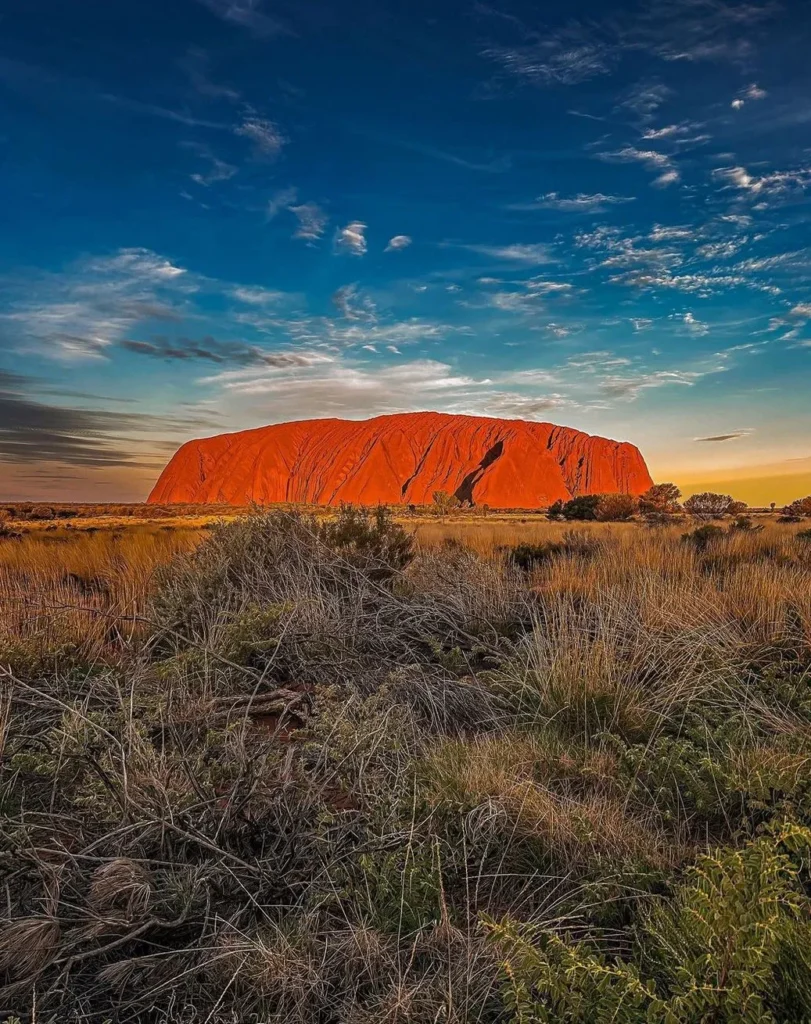

Ayers Rock, also known as Uluru, is a Central Australian icon standing tall in the heart of Uluru-Kata Tjuta National Park, surrounded by the vast desert of Central Australia. Famous for its fiery glow at sunset, Uluru is more than just a natural wonder—it’s a UNESCO World Heritage Site, rich in cultural heritage, natural features and sacred sites connected to the Indigenous people of the region.
But why does Uluru turn red at sunset? Let’s get into the science, spiritual significance and how to plan a perfect visit to see this beauty.
The Science of Uluru’s Colour Change
Uluru’s glow at sunrise and sunset is a result of atmospheric physics. As the sun moves, its light passes through more of the Earth’s atmosphere, scattering dust particles and shorter wavelengths (blues and greens) and allowing reds and oranges to dominate—known as Rayleigh scattering.
As a result, Uluru, made of arkosic sandstones and formed during an ancient mountain-building episode, reflects this warm light, especially when viewed from the desert plain. The Australian Bureau of Meteorology and Australian Geographic have studied these changes and linked them to the rock’s arkose sandstone and hot desert climate.
Iron Oxidation: Nature’s Brush
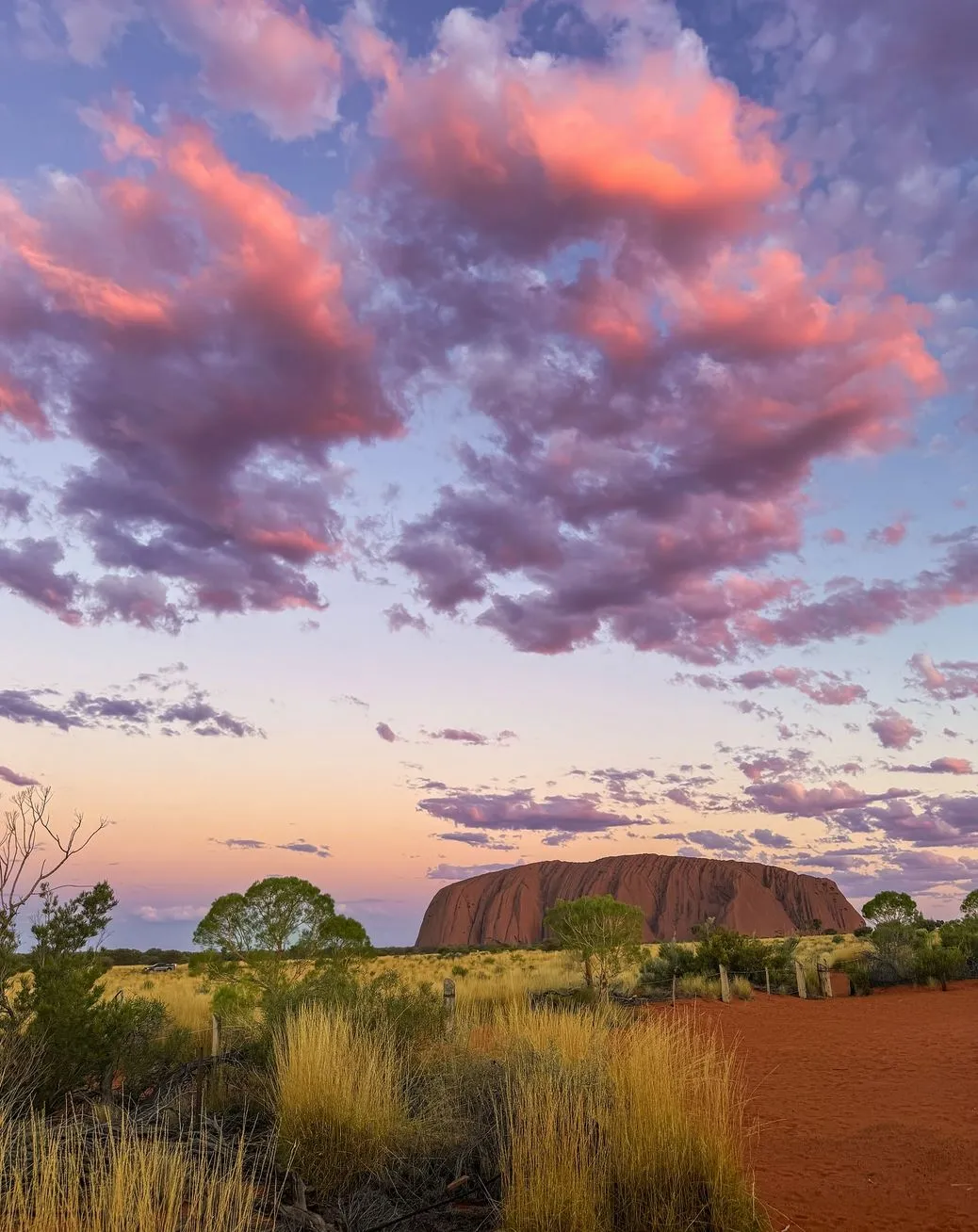
The sandstone of Uluru contains iron minerals that oxidise over time like rusting metal. This iron oxidation process has created the rock’s red coating, intensified by the golden light of sunset. The layers of sand, originally deposited during an episode of mountain building, were compacted over time to form Uluru’s shape.
When heavy rain falls, the rock may darken or develop mud after rain streaks show its dynamic surface. Its colour changes from ochre to crimson to deep purple as the sun sets—each colour revealing more of the rock’s story.
Prime Viewing Times
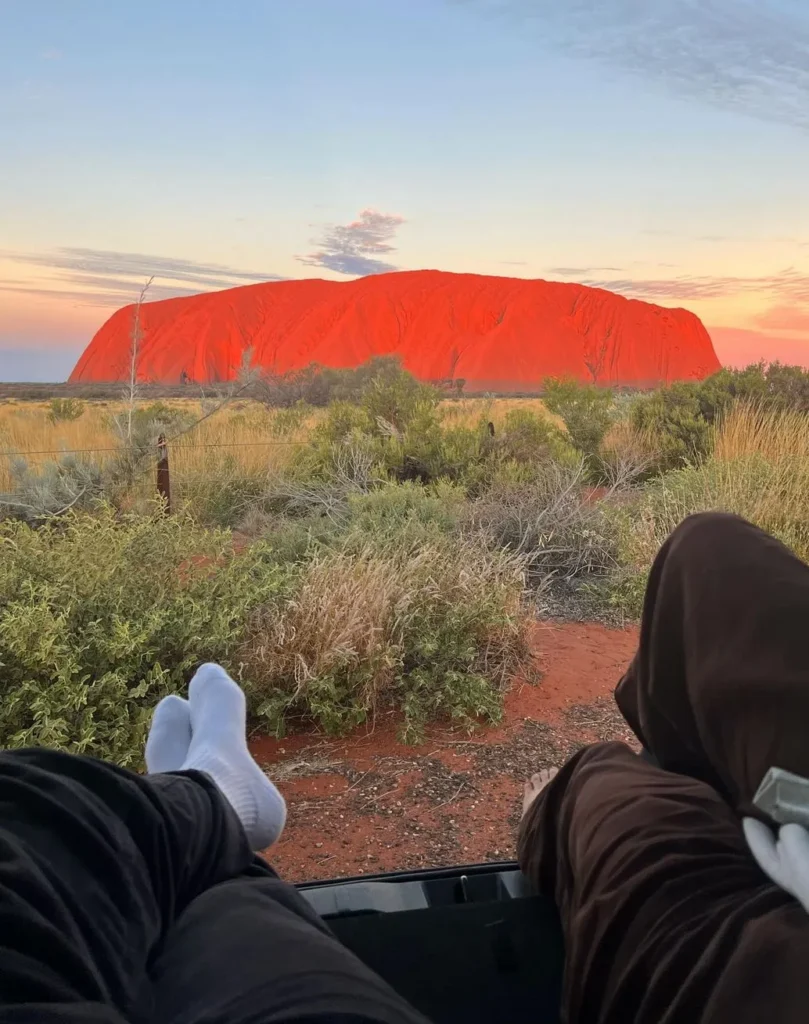
The Uluru sunset is more than just a pretty picture—it’s a moment of cultural connection, best experienced during the cooler months from April to October. During these times the conditions are perfect to explore the cultural landscape of Uluru-Kata Tjuta National Park, with the contrasting colours and shadows that make the rock look massive.
Sunset and sunrise are the best times because:
- The sun is at an angle that casts dramatic shadows
- Red and orange wavelengths are enhanced
- The desert is calm and peaceful
Whether you’re coming from South Australia, Western Australia or flying into Ayers Rock Airport, seeing Uluru at golden hour is a once-in-a-lifetime experience.
Uluru Through Anangu Eyes
For the Anangu, the traditional owners of this land, Uluru is a living being of the Aṉangu land. The rock is a part of the Tjukurpa (Dreamtime), where ancestral beings shaped the cultural landscape during the creation period.
Uluru isn’t just a landmark—it’s a sacred being. The forms of people, animals and spirit beings are said to be embedded in the rock’s features. The cultural values, cultural practices and the spiritual and conservation significance of Uluru are protected and preserved by both the Anangu people and Parks Australia.
Organisations such as the National Museum of Australia, Australian Institute of Aboriginal and Australian Geological Survey Organisation work closely with Aboriginal communities to respect and educate the public about Uluru’s cultural significance.
Best Places to Watch the Sunset
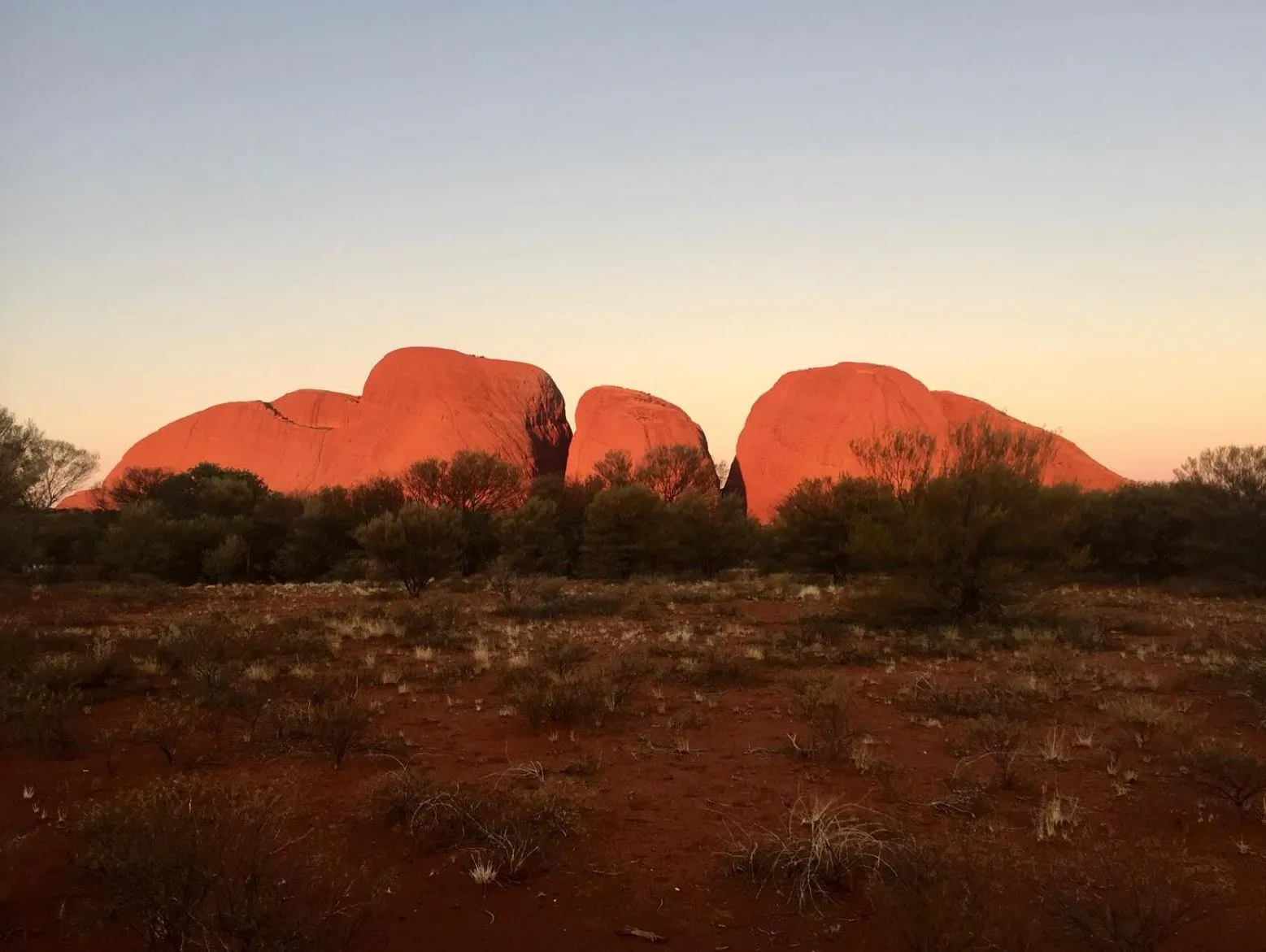
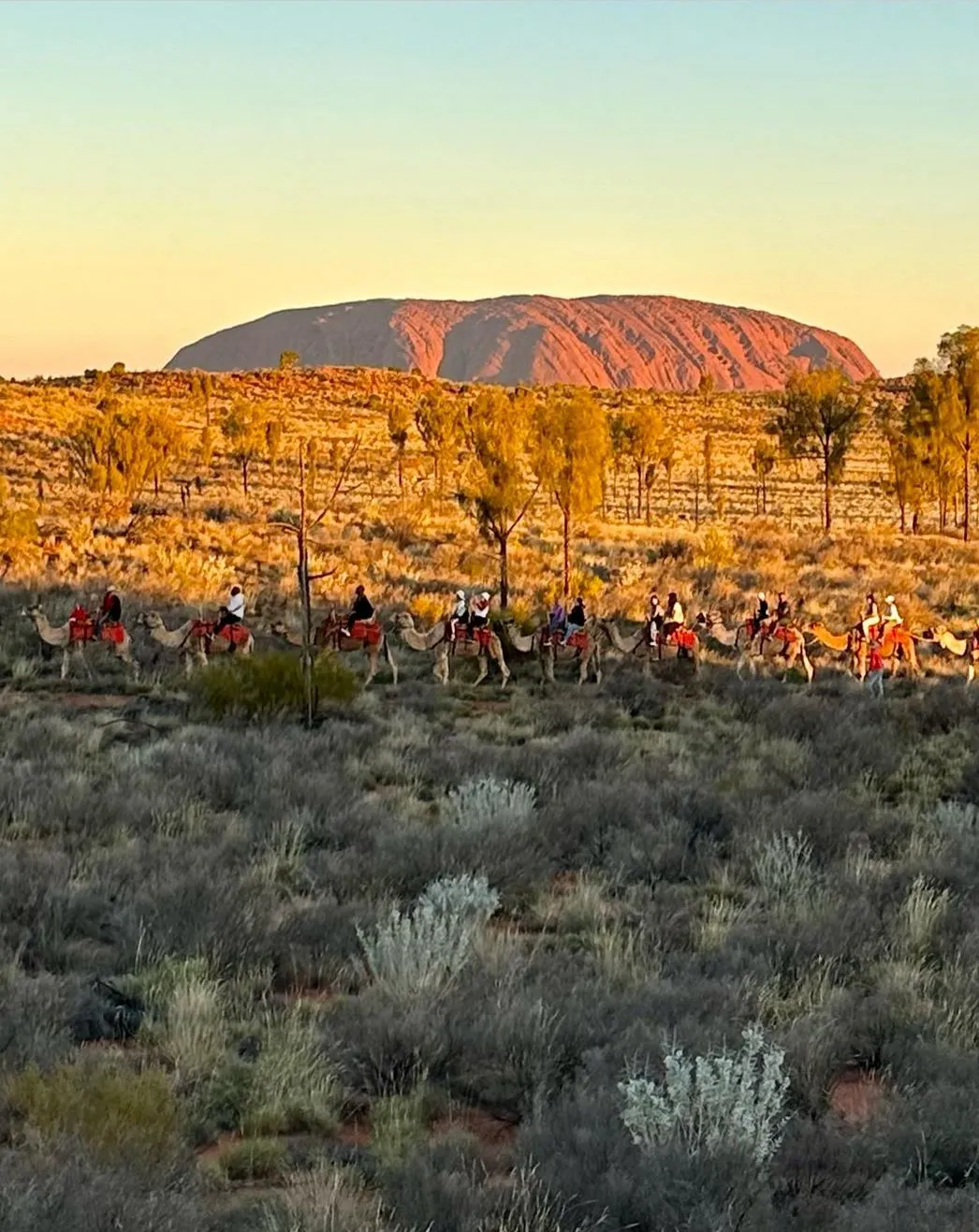
To really see the changing colours of Uluru, visit one of the following top sunset viewing spots:
1. Talinguru Nyakunytjaku
Located within Uluru Kata Tjuta National Park, this lookout offers views of both Uluru and Kata Tjuta (also known as Mount Olga or Mount Olga National Park). A great place to reflect on both geological and Aboriginal lands.
2. Sunset Viewing Carpark (Uluru)
A convenient tourist facility for those staying at Ayers Rock Resort or other accommodation-related tourist facilities.
3. Camel Tours and Scenic Flights
See Uluru from the back of a camel or from above in a helicopter. These options show the development of tourism infrastructure in the area and the tourism infrastructure adjacent to the park.
4. Kings Canyon and Kata Tjuta
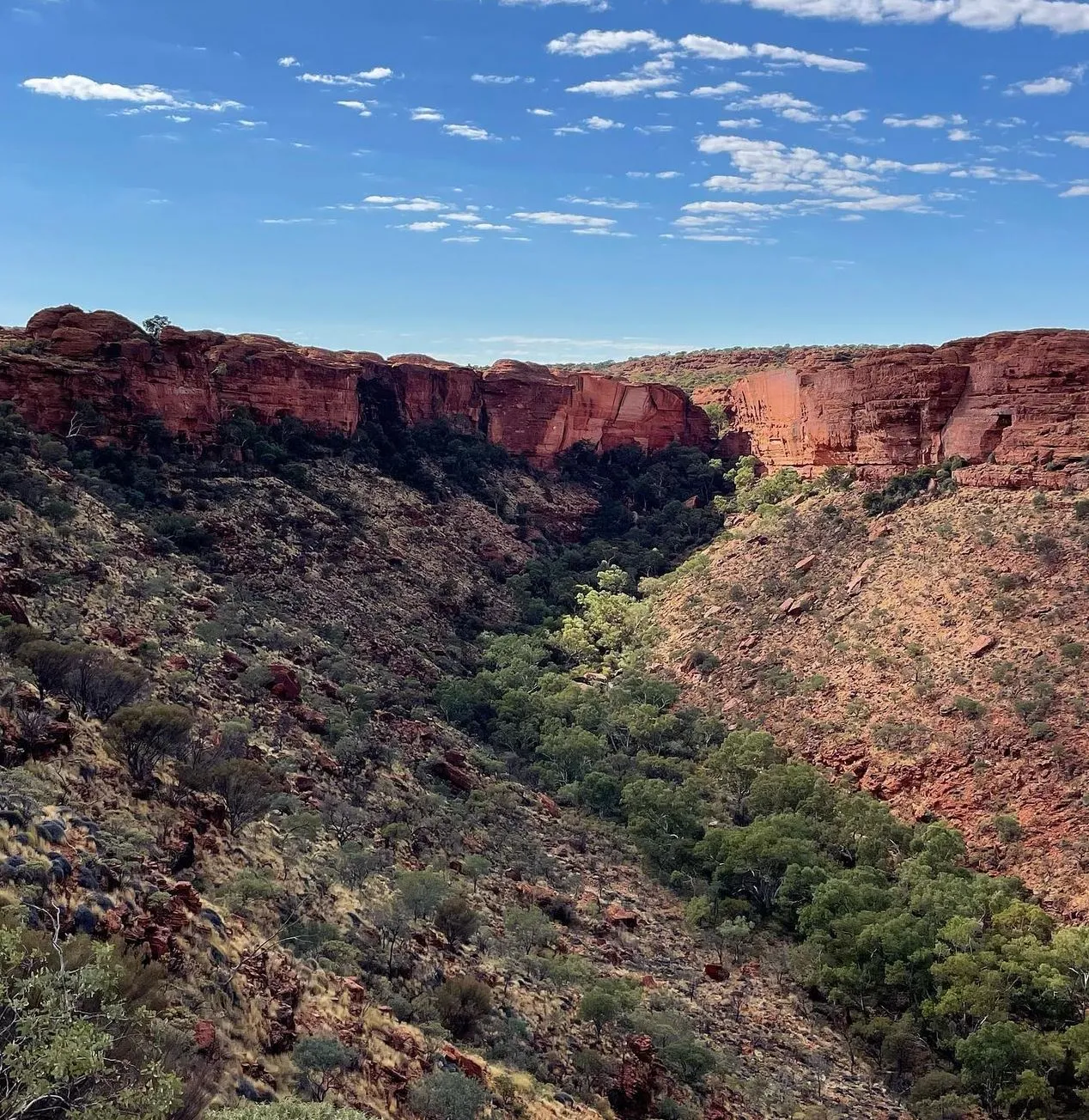
Extend your trip to nearby Kings Canyon and Katajŵa Tjėta National Park, where rock domes, desert skinks, and endemic plants thrive in the red rocks.
Experience Uluru at Golden Hour
To make the most of your visit to Uluru-Kata Tjuta National Park, here’s a quick guide:
- Best Time to Visit: Cooler months (April–October)
- How to Get There: Fly into Ayers Rock Airport or drive from South Australia or Western Australia
- What to Bring: Camera, tripod, water, fly net, respectful attitude
- Stay at Ayers Rock Resort for access to guided tours and Indigenous cultural activities
Learn about major plant foods, the reproduction of plant communities, and even spot exotic plant species or discover day roosting sites of native wildlife.
For those with limited time, an Uluru 2 day tour is a great way to see the highlights of Uluru-Kata Tjuta National Park, including sunrise and sunset viewings, guided walks and cultural insights from local Indigenous guides.
Final Thoughts
Why does Uluru turn red at sunset? It’s a mix of science, rock types, atmosphere and cultural significance. More than just a geological wonder, Uluru is a symbol of Australia’s rich Indigenous heritage, the ancient desert plains and the enduring connection to Aboriginal people.
Whether you’re exploring the geological story etched into the rock’s surface or connecting with the spiritual traditions of Indigenous Australians, a trip to Uluru at the golden hour is a journey into the heart of Australia.
FAQ
Why is Uluru red during sunset?
The red colour is due to iron oxidation in the rock’s surface and the way light scatters in the atmosphere during sunset, highlighting red and orange tones.
What is Uluru made of?
Uluru is made up of arkosic sandstone, a sedimentary rock rich in feldspar, formed over 500 million years ago during a major mountain-building episode.
Is Uluru sacred to Aboriginal people?
Yes, Uluru is a sacred site to the Anangu people, who are the traditional owners. It has spiritual and cultural significance linked to Tjukurpa or Dreamtime creation stories.
Can I watch the sunset without a guide?
Yes. The park has several public tourist facilities, including Talinguru Nyakunytjaku, where visitors can view the Uluru sunset on their own or as part of a tour.
Is it worth visiting both Uluru and Kata Tjuta?
Yes! Both Uluru and Kata Tjuta (Mount Olga) have unique geological formations, spiritual significance and stunning landscapes within the Kata Tjuṯa National Park.